
Kinesiology Master’s Degree
Explore Human Movement. Advance Your Future
Discover how people move, learn, perform, and thrive. At Washington State University, the MS in Kinesiology combines advanced study with hands-on research, individualized mentoring, and opportunities to make a difference.
Explore Areas of Study
From studying how the brain controls movement to improving injury prevention and well-being, Kinesiology research at WSU connects scientific questions to real-world challenges. Find a topic that interests you, then explore the faculty and labs working in that area.
Motor Learning, Control & Technology
Explore how the brain controls movement, how people learn new skills, and how technology advances human performance research.
Biomechanics, Balance & Rehabilitation
Investigate movement mechanics, balance, injury prevention, and rehabilitation.
Exercise Physiology & Endurance Safety
Explore how the body responds to exercise and how research supports endurance performance and athlete safety.
Physical Activity, Mindfulness & Well-Being
Study how physical activity and mindful movement contribute to health and well-being.
Inclusive & Community-Based Health
Discover how movement-based programs support inclusive participation, positive body image, and community well-being.
Research Highlights and Current Projects
Find What Moves You
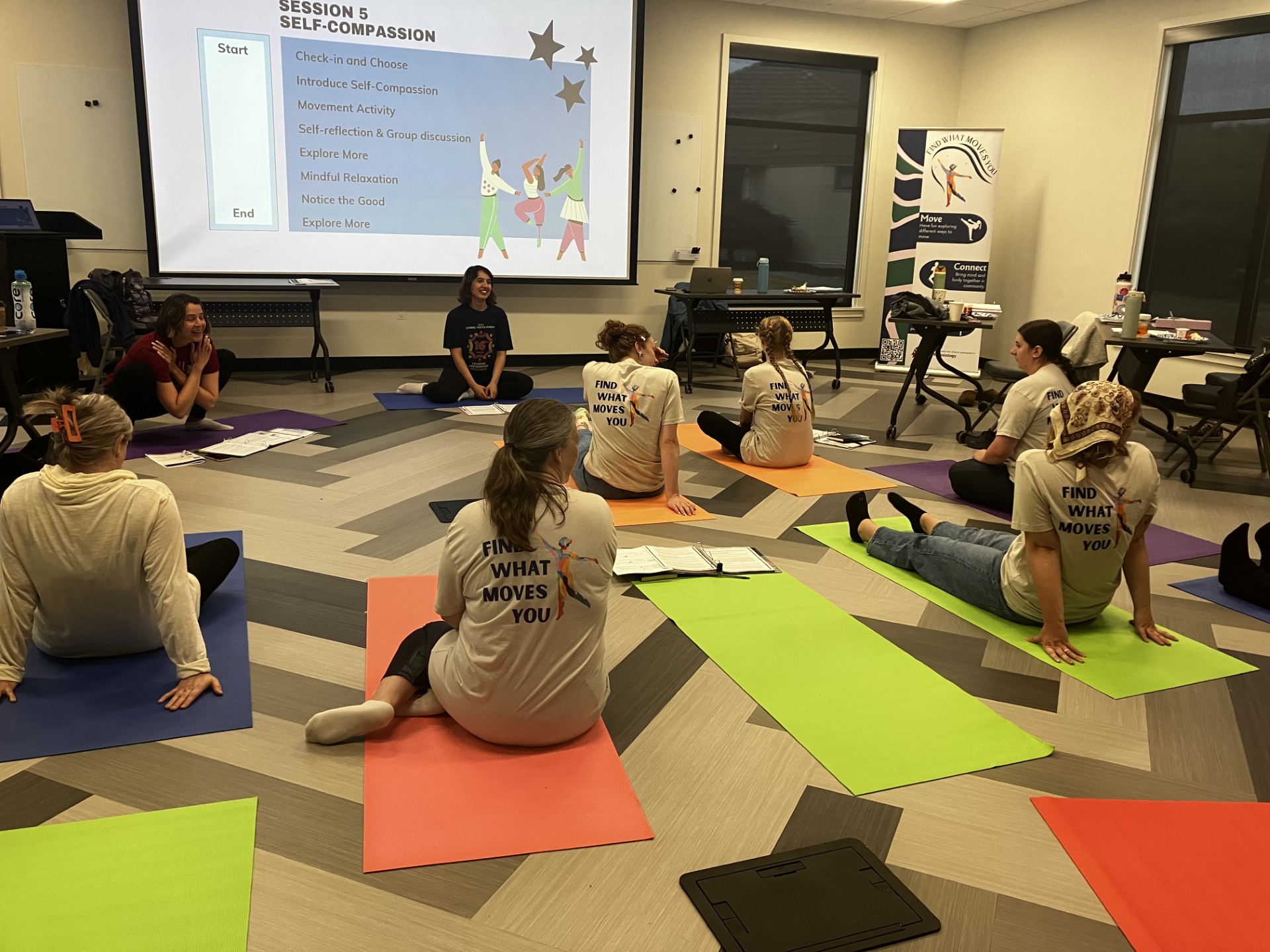
Faculty investigate a community-delivered, movement-based program that supports positive body image and well-being in girls. Graduate students may engage in implementation, evaluation, and outreach.
Learn More About Find What Moves You
Explore the Physical Activity Psychology Laboratory
Source: Dr. Ullrich-French, Dr. McMahon, and Anne Cox
At the Ironman World Championships
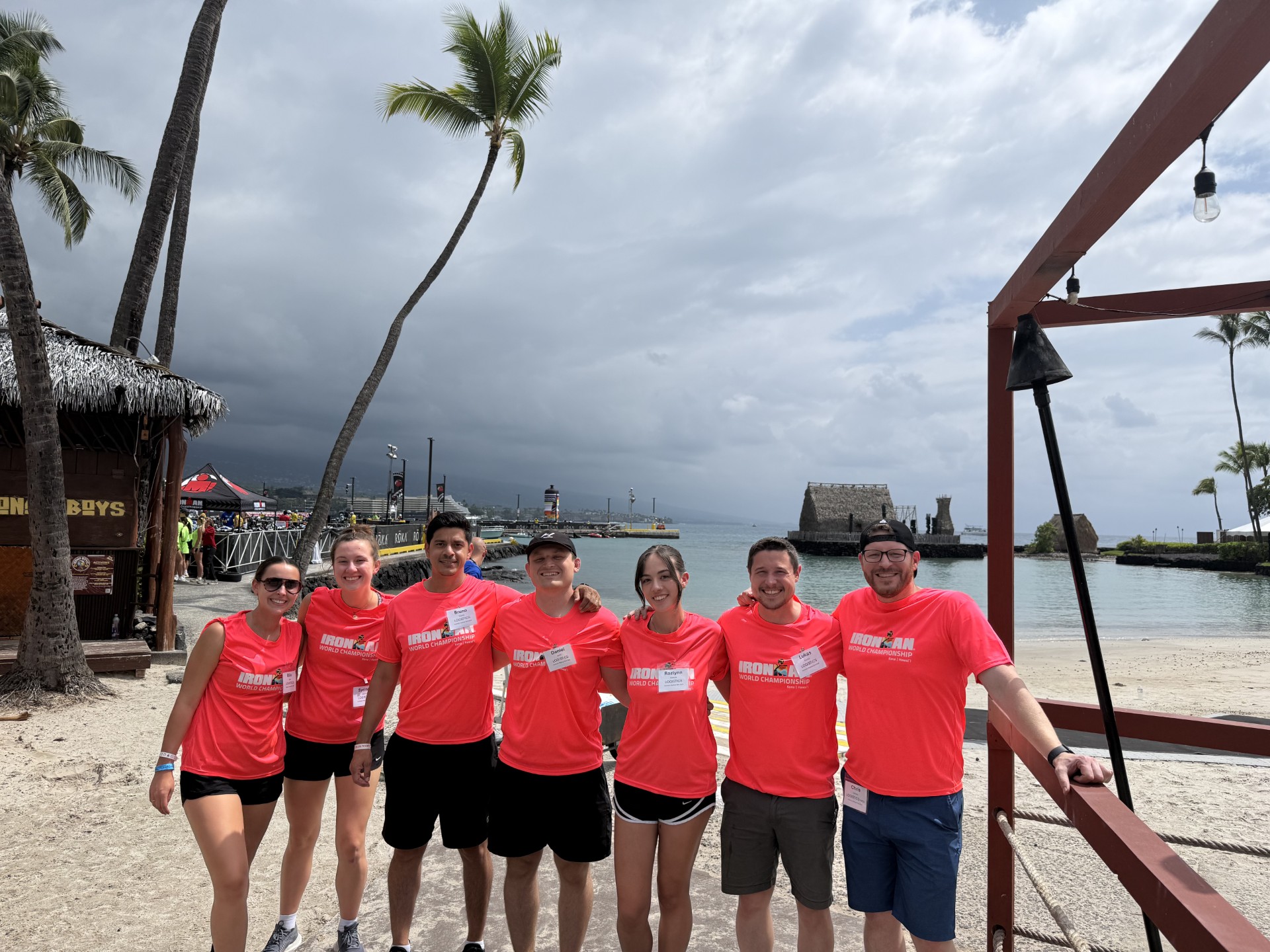
Exercise Physiology & Performance Lab graduate students can collect race-day data and experience the medical tent as part of a continuing ultra-endurance injury-prevention research program.
Explore the Exercise Physiology & Performance Laboratory
Explore the Global Triathlon Safety Database
Source: Dr. Connolly
How do the eyes help us balance?
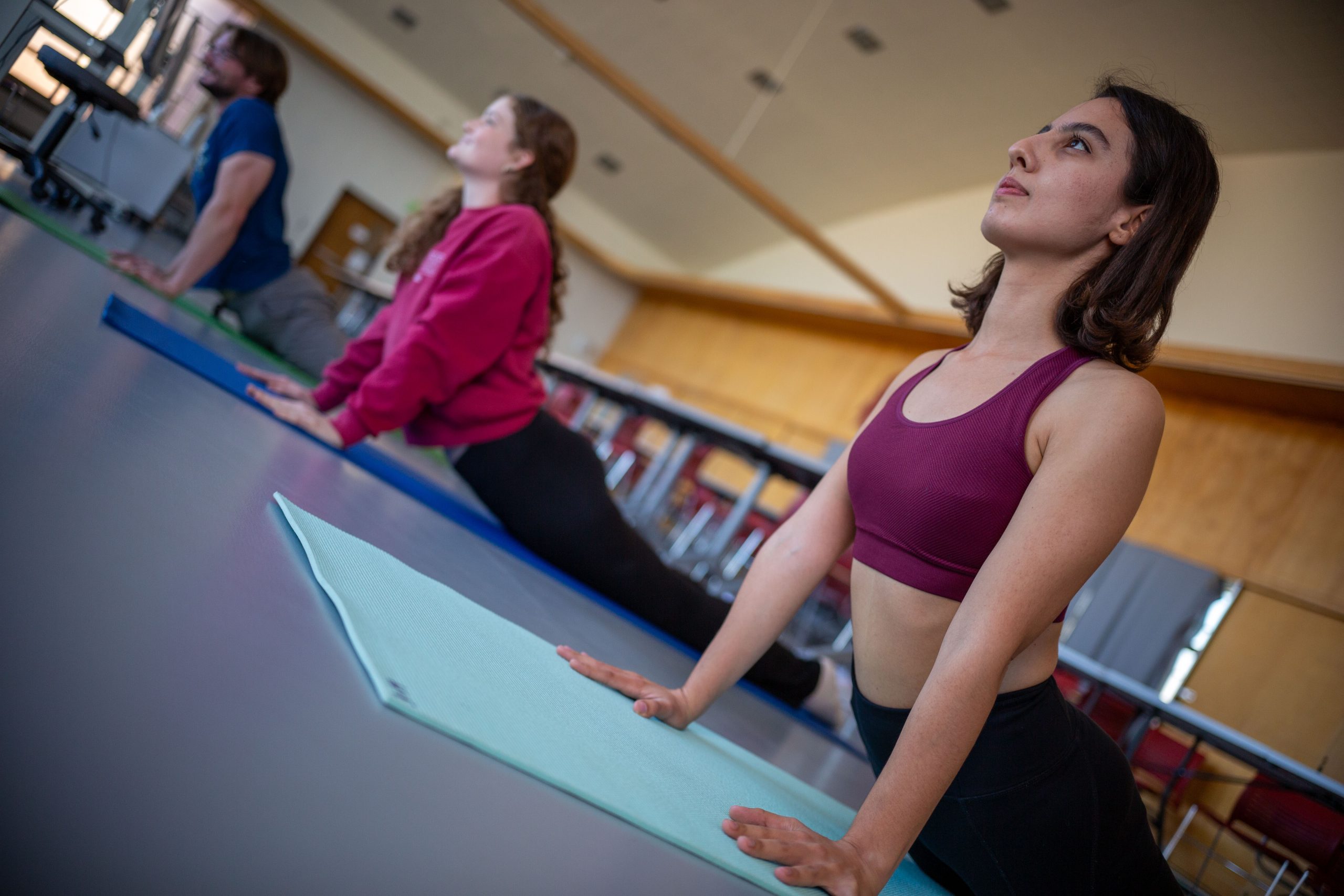
The Athletic Training & Rehabilitation Lab studies how people with chronic ankle instability use visual information during balance tasks, combining wearable eye-tracking glasses with force plates.
Learn More About Dr. SeokJae Choe
Source: Dr. Choe
The Interdisciplinary Music Performance & Learning Lab uses motion capture to understand rhythmic movement and test ways to support learning through paired practice, virtual instruction, and mental imagery.
Explore Interdisciplinary Music Performance & Learning Lab
Learn More About Dr. Tristan Loria
Source: Dr. Loria
The Applied Biomechanics Laboratory uses ultrasound to examine changes in plantar fascia, muscle, and tendon properties after loading such as running and strength training.
Learn More About Dr. Lukas Krumpl
Source: Dr. Krumpl
The Laboratory for Motor Intelligence combines high-density EMG, dynamometry, ultrasound, and computational approaches to study neuromuscular coordination and knee loading.
Learn More About Dr. Zhong Wang
Source: Dr. Wang
The Maternal Orthopedics & Mechanics Lab studies biomechanics, balance control, pregnancy, and bipedal movement.
Explore the Maternal Orthopedics & Mechanics Lab
Explore Graduate Research Opportunities
Source: Dr. Catena
At WSU, graduate students learn through research, projects, coursework, and close collaboration with faculty mentors. Our flexible MS program lets you explore your interests and shape a path toward your academic and professional goals.
Why WSU? Pathways and Graduate Experience
Learn by Doing, Alongside Faculty Mentors
At Washington State University, graduate study in Kinesiology is shaped by your interests, research goals, and career aspirations. Our MS program combines flexible coursework with individualized faculty mentorship, allowing students to develop an academic and research experience aligned with their goals.
Students can explore interdisciplinary research, participate in hands-on projects, and develop skills that support future opportunities in research, doctoral study, and professional practice.
Flexible Academic Pathways
Work with your faculty advisor to develop a course plan that aligns with your interests, research goals, and future career.
Personalized Faculty Mentorship
Learn through close collaboration with faculty who provide individualized guidance, research mentorship, and professional development opportunities.
Hands-On Research Experience
Build practical skills through laboratory research, applied projects, interdisciplinary collaborations, and opportunities to share research findings.
Explore Your MS Pathway
MS with Thesis
Build expertise through a focused research study, written thesis, and oral defense. Often suited to students considering research or further graduate study.
MS without Thesis
Develop advanced knowledge through coursework and a culminating project. Connect scientific inquiry to professional or academic interests.
Where Could Your MS Take You?
An MS in Kinesiology can support next steps in research, further graduate education, and professional work involving movement, performance, rehabilitation-related research, and health promotion. Student experiences and outcomes vary by pathway and interests.

Student learning outcomes (SLOs)
- Ability to think critically, evaluate, understand, apply, and communicate scientific research.
- Demonstrate advanced kinesiology knowledge in the chosen area of focus.
- Ability to understand and apply research principles.
- Awareness and understanding of how diversity issues, special and protected populations influence research and practice.
- Development of professional identity appropriate for future career plans.
Research in Action
Work with Real Questions and Real People
Explore opportunities to collect endurance-event data with Dr. Connolly, investigate balance and eye movements with Dr. Choe, or contribute to community wellness research with Drs. Ullrich-French and McMahon, and Anne Cox.
Develop Tools and Research Skills
Gain experience with motion capture in Dr. Loria’s laboratory, ultrasound imaging in Dr. Krumpl’s laboratory, and neuromuscular measurement and modeling in Dr. Wang’s research.
Learn Through Close Mentoring
Work closely with faculty mentors, explore independent research projects, and develop research and leadership skills through opportunities such as mentoring undergraduate students.
Contribute to Community Wellness Research
Explore Funding Opportunities
Graduate funding may be available through teaching and graduate assistantships, research-supported positions, scholarships, and other awards. Opportunities and eligibility vary by student and term. Please contact the program for current information.
Ready to Apply
Start by exploring research topics and identifying potential mentors. Review the MS pathways and application requirements, discuss research fit when appropriate, and apply through the official WSU graduate application process.
Your Next Steps
- Explore Research Interests and Faculty Mentors
Identify research areas that interest you and explore faculty laboratories to find potential mentors.
- Review Degree Options and Admission Requirements
Learn about the MS with Thesis and MS without Thesis pathways, and review the official program requirements.
- Discuss Research or Advising Fit
Contact potential faculty mentors or the graduate program to discuss research interests, advising opportunities, and program fit.
- Submit Your Graduate Application
Complete your application through the official Washington State University graduate application process.
Questions? Connect with Us
Have questions about research interests, graduate pathways, or applying? Connect with the Kinesiology graduate program for guidance on the next step.
Program Contact: Sarah Ullrich-French, Professor and Graduate Director
Email: sullrich@wsu.edu
College Graduate Office: Maria Kobets, Director of CESHS Graduate Studies
Email: maria.kobets@wsu.edu