Research Conversations
We love research. And conversation. Now they’re combined.
We’re not the first folks to engage in dialogue about our research endeavors. We just perfected it!
A handful of times each semester, we give some time to a faculty to share their research with the rest of us. These one-hour (max!) sessions are always very compelling.
Upcoming presentations
As more presentations are added for the 2025 spring semester, they will be posted here.
March 03, 2025 — 12:10-1:00 p.m. PST
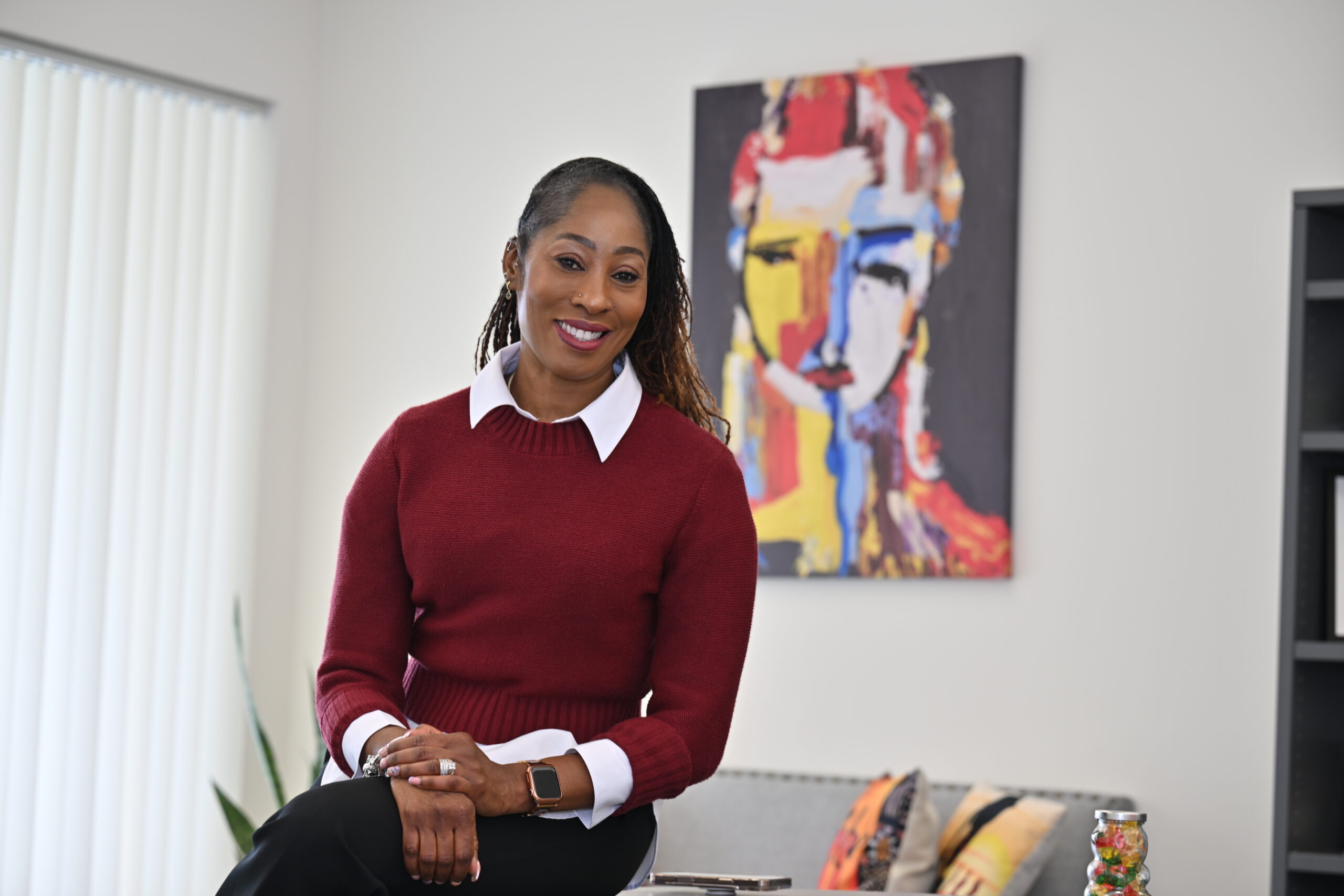
Dr. Karen Thomas-Brown
No Easy Road: The Fight to Stay, Teach, and Belong
This research is a compilation of dreams chased, sacrifices made, and an unbreakable sprit that refused to back down. Through every challenge, these teachers stood tall, proving that resilience is not just about survival, it’s about rewriting the story on their own terms. Dr. Karen Thomas-Brown, Ph.D., is Dean of WSU’s College of Education, Sport, and Human Sciences. She was previously associate dean for Inclusive Excellence in the College of Engineering at the University of Washington. Recognized as a national leader in alternate pipelines for teacher certification, capacity building, and success by the Department of Education, Dr. Thomas-Brown has partnered with industry leaders and sponsors for graduate student STEM initiatives such as Meta Day and the Amazon Elevate Fellowship.
Recent presentations
Dr. Josh Taylor – Improving Post-School Outcomes for Youth with Intellectual and Developmental Disabilities through Strategic Team-Based Lines of Research
January 16, 2025 — 12:10-1:00 p.m. PST
As educational researchers, our work often focuses on enacting positive change to address complex, systemic problems related to how policy and practice intersect in the real world. Responding to this challenge with limited time is daunting, and impossible for any one researcher to do in isolation. In this session, Dr. Taylor will share context on his special education research and lessons learned on strategically forming and sustaining research teams to tackle overlapping lines of research. We will then open a discussion for faculty to share their own tips and triumphs related to research collaboration.
Josh Taylor is an assistant professor of Special Education in the Department of Teaching and Learning at Washington State University. Dr. Taylor draws from his background as a K-12 special educator to inform his research and teaching, with a focus and passion around promoting positive outcomes for students with autism and other intellectual and developmental disabilities. He earned a PhD in special education from Virginia Commonwealth University with a focus on research-to-policy implementation, and a Master’s in Education from the University of Virginia. Although Dr. Taylor’s background is in K-12 settings, much of his research is focused on employment interventions and outcomes, particularly for transition-age youth.
Dr. Sarah Ullrich-French – Riding the Research Wave: Navigating the Journey in Community
March 03, 2025 — 12:10-1:00 p.m. PST
In this exciting presentation and discussion, Sarah shared important moments in her research path and showcase how people and a sense of community were pivotal at key points in her career. We invited attendees to reflect on and share about the people, communities, and opportunities that have played key roles in their research journeys. We concluded by looking forward to ways that we can build research communities at different levels of our career trajectories. There was time for Q and A.
Dr. Sarah Ullrich-French is a Professor in CESHS’s Kinesiology & Educational Psychology Department and Co-Director of CESHS’s Psychology of Physical Activity Lab. Her research addresses the mechanisms that maximize positive physical activity experiences. Her formal training is in Kinesiology, with an emphasis on sport and exercise psychology and youth physical activity. Her interest in youth physical activity intersects with areas of social development, psychology, education, positive youth development, and health. Dr. Ullrich-French’s research focuses on social contextual and motivational processes in physical, social, and psychological development. One strand of her research involves examining physical activity motivational processes and behavioral outcomes in youth and adults. A second strand involves examining how physical contexts and interventions impact psychosocial, behavioral, and health outcomes. Her current research activities focus on the measurement and application of movement-based mindfulness as a potential mechanism to foster sustained engagement in physical activities.
Robert Danielson’s Research Conversation
September 16, 2025
CESHS Faculty Panel on AI in Education
October 20, 2025
Anne Marie Guerretaz & Angel Sobatta’s Research Conversation
November 12, 2025
Presentations from 2024
Dr. Margaret Vaughn – Leveraging the Power of Collaboration for Project Planning, Data Analysis and Publication
February 26, 2024— 12:10-1:00 p.m. PDT
Dr. Margaret Vaughn will discuss the power of collaboration when planning research, writing for publication, and data collection strategies. Based on project teams she has led on teacher adaptability, visioning, and agency, the conversation will center on how to strategically plan research and writing for publication and continued generative collaboration with colleagues. She will also discuss what she learned from her recent experience as a US Fulbright Specialist, as well as tips for publishing in high-impact journals.
Dr. Vaughn is a Professor of Language, Literacy & Technology at the WSU College of Education, Sport, and Human Sciences. She received her master’s in Elementary Education from Drexel University and her Ph.D. in Curriculum and Instruction from the University of North Carolina Greensboro. As a literacy researcher and former classroom educator, she recognizes the valuable role of teacher input and decision-making in policy and practice and supports efforts to develop equity-focused learning environments. She is an advocate for student agency and works both nationally and internationally to discuss the role of student agency in learning environments. She has published 5 books and 60 journal articles and has won several national awards for her publications and research. She is currently Chair of the Research Committee for the Association of Literacy Educators and Researchers.
Dr. Yuliya Ardasheva – Leveraging the Power of Faculty-Graduate Student Collaborations
March 20, 2024 — 12:10-1:00 p.m. PDT
Dr. Ardasheva will continue our focus on the power of collaboration for advancing research and dissemination. She will discuss collaborations between faculty and graduate students, including a cross-departmental, cross-campus project on using case-based instruction to develop culturally responsive, sustaining mindsets and skill sets in future teachers and leaders. The conversation will center on how to strategically engage generative collaborations with graduate and undergraduate students to conduct research and write for publication. Please come prepared to share your own experiences and opportunities for faculty-student collaborations unique to your academic units or departments.
Dr. Ardasheva is an Associate Professor in multilingual learner (ML) education at WSU. Her research focuses on student individual differences, simultaneous language and academic development, and teacher ML preparation, beliefs, and practices. Yuliya has published her work in TESOL Quarterly, Language Learning and Review of Educational Research, among other high-impact venues. She is the recipient of the 2022 Award for Distinguished Research (Teaching English to Speakers of Other Languages), 2021 Mid-Career Award (Second Language Research Special Interest Group, AERA), and 2019 Faculty Excellence in Research Award (College of Education, Sport, and Human Sciences, WSU).
Dr. Robert Catena – NSF Funding: Experiences and Impressions
September 19, 2024 — 12:10-1:00 p.m. PDT
Dr. Catena will discuss his recent path from a brief conversation with a program officer at a conference to receiving recent NSF funding. The process is complex, and Robert will address challenges and tips for the submission and resubmission process. During the discussion, we invite attendees to join the conversation and share their own experiences with NSF (both successful and not-yet-successful). Robert will also touch on differences between NSF and NIH for proposal planning.
Dr. Robert Catena is an Associate Professor of Kinesiology at the WSU College of Education, Sport, and Human Sciences. He completed his postdoctoral work at the Harvard School of Public Health and received his PhD and M.S. from the University of Oregon. He is originally from Alaska, and received his Bachelor’s degree from the University of Alaska, Fairbanks. Robert is Director of the Gait & Posture Biomechanics Laboratory at WSU. His research focuses on preventing falls and occupational injuries during pregnancy. Robert has published in numerous high-impact journals and presented at national and international research conferences.
Dr. Tingting Li – Artificial Intelligence and Elementary Science Teaching and Learning
October 17, 2024 — 12:10-1:00 p.m. PDT
Artificial Intelligence (AI) is rapidly transforming the ways that science is taught and learned. Dr. Li will share insights from her research on AI-enhanced elementary science teaching and learning, drawing from several recent projects.
Tingting Li is an Assistant Professor of Science Education at the WSU College of Education, Sport, and Human Sciences. She received her PhD from Michigan State University in Educational Psychology and Educational Technology and a second PhD in Curriculum and Instruction from Northeast Normal University. Her research explores the underlying complex learning process of building usable knowledge and how student engagement interacts with this process by leveraging state-of-the-art technologies such as AI. She designs learning environments and assessments that support students’ usable knowledge building as well as their psychological well-being (e.g., engagement, social and emotional learning).
Dr. Peng He – Integrating Generative AI into Three-Dimensional Learning Progression: Supporting Teacher Instruction and Student Learning in Science Education
November 14, 2024 — 12:10-1:00 p.m. PST
Dr. Peng He will present insights from his recent NSF-funded project, focusing on how generative artificial intelligence (AI) is being integrated into standards-aligned learning progressions to enhance both teacher instruction and student learning in science education. He will also discuss the future opportunities and challenges of employing AI in K-12 classrooms, drawing from his research and collaborative partnerships with schools.

Dr. Stephany RunningHawk Johnson – Indigenous Students on Study Abroad: Conducting Research in Costa Rica with the Ngäbe
January 25, 2023
In this Research Conversation, Stephany will describe her recent research project with a group of Indigenous students from across the U.S. The research group traveled to Costa Rica for a study abroad experience that included a cultural exchange with the local Ngäbe people. Students conceptualized a science project, gathered data, analyzed results and presented research findings. This on-the-ground work with Indigenous students and their mentors is unique among study abroad programs, and represents a promising avenue for similar programs.
Dr. Stephany RunningHawk Johnson is an Assistant Professor in Cultural Studies & Social Thought in Education at WSU, and a member of the Oglala Lakota nation. Her research focuses on recruiting, retaining and supporting Indigenous students who are majoring in science fields at universities. She is interested in how the way science courses are taught can create barriers for Indigenous students and other students of color. Stephany works with local Tribes to incorporate place-based education and Indigenous Traditional Ecological Knowledges to increase Indigenous students’ sense of identity and belonging in university settings. She also conducts research on how non-Indigenous instructors can decolonize their curriculum and teaching practices.
All of Stephany’s work focuses on Nation building, Tribal sovereignty, and empowering Indigenous communities and students to advance social justice. She intentionally works to prepare teachers to challenge colonialism and to create inclusive and welcoming learning environments for their students and colleagues. Her teaching and research is done through an Indigenous feminist lens, bringing criticality and hope to her work.
Dr. Judy Morrison – Socio-Environmental Science Investigations to Promote Geospatial Thinking: Integrating ArcGIS Digital Technologies for Learning
February 21, 2023 — 12:10-1:00 p.m. PST
In this Research Conversation, Dr. Morrison will describe her 4-year NSF ITEST Collaborative Research project. The grant team includes faculty at WSU Tri-Cities, Lehigh University in Pennsylvania and Texas Christian University in Fort Worth. The project aims to improve teachers’ and students’ use of technology, with a focus on local issues and community-based decision-making. Through professional development and school-based support, high school teachers design and implement inquiry-based science investigations using map-based mobile data collection and analysis with web-based mapping software. Dr. Morrison will describe professional development research and outcomes, including examples of learning activities developed by teachers.
Dr. Judy Morrison is a professor of science education, Academic Director of the Tri-Cities College of Education, Sport, and Human Sciences, and Associate Vice Chancellor for Research & Graduate Programs at WSU Tri-Cities. Her research focuses on the professional development of science teachers, including best practices for preparing science teachers who teach in STEM schools, integrate technology, and work with English Learners (ELs).
Dr. A.G. Rud and Mark Fagiano – Using XR and AI Technologies in the Teaching of Ethics in the Humanities and Education
September 28, 2023
Dr. Rud and Fagiano will explore the educational benefits of incorporating XR and AI technologies in the teaching of ethics in humanities and teacher education courses. Despite significant advances in technology to enhance learning and engagement, many educators struggle to incorporate technology into their curriculum. Although ethics courses often cover abstract ethical dilemmas, studies show that merely thinking about moral choices does not change one’s character or future actions. Yet XR technologies show promise in simulating moral sensations to help students move beyond reflection to develop habits that enhance their lives. AI technologies can be used to design and structure decision trees within these XR experiences. Drs. Rud and Fagiano plan to develop a WSU Ethics Virtual Reality (EVR) lab to explore questions related to diversity, equity, and inclusion in education and ethics. The lab will be programmed for interdisciplinary programs such as medical ethics, business ethics, educational ethics, and environmental ethics, and will establish infrastructure for further research. This innovative line of research may transform the teaching of history, political science, sociology, education, and other disciplines in which course content centers on moral and ethical decisions or analysis. Drs. Rud and Fagiano also plan to develop a research ethics module for use in training WSU researchers.
Dr. A.G. Rud, Distinguished Professor of Cultural Studies and Social Thought in Education, is nationally known for his expertise in the philosophical dimensions of education. His research focuses on the cultural foundations of education, particularly the moral dimensions of teaching, learning, and leading, P-20. Rud is past president of the John Dewey Society and edited its peer-reviewed international journal, Education and Culture, for six years. He is past chair of the Dewey Studies Special Interest Group of the AERA. Rud is president of the Philosophy of Education Society. He is widely published in his field, and recently contributed to and coedited two books on Dewey.
Dr. Mark Fagiano is an Assistant Professor of Philosophy at WSU. His research focuses on philosophical problems in the disciplines of ethics, social and political philosophy, and the philosophy of technology. As a pragmatist, Dr. Fagiano’s research is grounded in the vision of William James, especially the theory of relations. Dr. Fagiano explores pressing existential and social problems related to the pursuit of living a good life. In his teaching, he aims to help students learn how philosophical reflection can assist them in making important life decisions.
Dr. Sarah Newcomer and Dr. Kathleen Cowin – Learning to Become Culturally Sustaining, Socially Just Educators: Collaborative Conversations with Teacher and Leader Candidates
March 10, 2022
In this Research Conversation, we will present our work with teacher and school leader candidates at WSU Tri-Cities in learning more about culturally sustaining, socially just pedagogy (CSSJP) through Collaborative Conversations.
Sarah Newcomer is an Associate Professor in Literacy Education at WSU. Her research and teaching focus on culturally sustaining, socially just language and literacy practices and family-school-community partnerships, particularly for multilingual learners. She has served on multiple grants in support of her research interests, including her current role as Co-PI with a team of CESHS colleagues led by Dr. Gisela Ernst-Slavit on ELL IMPACT, an Office of English Language Acquisition grant to develop an alternative route to a teaching certification program for paraeducators seeking teaching certificates and endorsements in ELL/BLE education. She recently began investigating how pre-service teachers’ understandings of culturally sustaining, socially just pedagogy may be supported by collaborative conversations with aspiring school leaders. Her work has been published in venues such as the Journal of Language, Identity and Education, Language Arts, and the Journal of School Leadership, among others. She has taught for over 20 years, including in a K-8 Spanish/English dual language program, with business professionals in Japan, and with families in a family literacy program.
Kathleen Cowin is an Associate Professor (Career Track) in Educational Leadership at WSU. Her research focuses on the development of effective relational co-mentoring practices and the creation of co-mentoring circles among educational leadership students. Her current co-mentorship research is focused on culturally sustaining, socially just pedagogy enhanced by collaborative conversations between pre-service teachers and aspiring school leaders. She served as a teacher and elementary and middle school principal for over 25 years and also completed her Superintendent Certification. Kathleen is past Chair for the American Educational Research Association Mentorship & Mentoring Practices Special Interest Group, and in 2020 she was selected as a member of the WSU President’s Teaching Academy.
Dr. Mike Trevisan – The Importance of Policy Research and Evaluation for International School-based Counseling
April 15, 2022
Description: Although school counseling has struggled to secure a foothold in schools around the world for various reasons, it is gaining ground as a means to address the decline in students’ mental health due to the pandemic. This Research Conversation will trace the development of school-based counseling policy research, program evaluation, and the work of the International Society for Policy Research and Evaluation in School-Based Counseling (ISPRESC). We will also highlight recent federal developments suggesting that school counseling will soon gain a solid foothold in US schools.
Bio: Since 2013, Dr. Mike Trevisan has served as Dean of the WSU College of Education, Sport, and Human Sciences. His research focuses on the use of program evaluation to better our schools and communities. Much of this work builds the professional capacity of school personnel for evaluation work. Dr. Trevisan has provided workshops and seminars on evaluation topics to graduate students and faculty throughout the world. He is a founding member and chair-elect of ISPRESC, an international coalition of faculty, deans, policy makers and practitioners promoting school-based counseling as a policy mechanism and essential professional role to support K-12 students and teachers.
Dr. Amy Roth McDuffie – Research Foci and Funding Across My Career: Key Projects and Turning Points
September 26, 2022
Description: Amy Roth McDuffie is a Professor in Mathematics Education in the Department of Teaching and Learning. She will be sharing her research foci across over 20 years in higher education, along with how her interests have developed and shifted.
Bio: Amy has received funding from the National Science Foundation (NSF) for multiple projects, as well as from foundations for smaller projects. Her newest project began in August. She is serving as a PI on a multi-university, NSF-funded project entitled, “Quantifying Curricular Reasoning as a Critical Practice in Mathematics Teaching.”
Drs. Lauren Bruno and Holly Whittenburg – Supporting the Successful Transition of Students with Disabilities from School to Adult Life Through Policy & Practice.
October 12, 2022
Description: Drs. Lauren Bruno and Holly Whittenburg will present their research on two individual projects related to the transition from school to adult life for students with disabilities. They will then discuss how their two lines of research converge and the work they do together. There will be time for discussion.
Bios: Dr. Bruno’s research focuses on improving transition outcomes for youth with disabilities. More specifically, she focuses on (1) improving the preparation of pre-service and in-service educators’ ability to implement evidence-based practices related to transition; (2) using the Universal Design for Learning framework (including assistive technology) to improve post-school outcomes of youth with disabilities; and (3) post-secondary educational opportunities for youth with intellectual and development disabilities. Lauren also focuses on the shortage and high attrition rates of special educators.
Dr. Whittenburg’s research focuses on improving employment outcomes for transition-aged students on the autism spectrum and students with intellectual disability. Her recent research examines interventions to teach employment-related skills, approaches to creating opportunities for inclusive work experiences, and how special education and vocational rehabilitation law and policies affect the transition experiences of students with disabilities.
Katherine Rodela
November 09, 2022
Diversifying Leadership Pathways in Schools: Key Lessons from the Counternarratives of Leaders of Color
In this research conversation, Katherine will share findings from her qualitative study with educators and administrators of color in the Pacific Northwest. Her work provides insights for diversifying leader and teacher pathways informed by research participants’ stories of struggle, cultural wealth, and equity-focused leadership. There will be time for discussion.
Katherine Rodela is an Associate Professor of Educational Leadership and Associate Dean of Equity and Inclusion for Faculty and Staff Development. She teaches courses related to equity, social justice leadership, and inclusion of diverse communities, families, and students in K-12 schools. Her research focuses on leadership for equity and justice. As a third-generation Mexican American and first-generation college student, Katherine is committed to being a community-engaged scholar. Her work advances educational equity and culturally responsive education for marginalized communities, particularly low-income communities of color across the PK-20 pipeline.
Katherine’s focus on leadership for equity and diversity inspires three lines of qualitative research: (1) diversifying the educational leadership pathways in PK-12 education, (2) developing equity-focused school and district leaders, and (3) uplifting and centering the leadership of marginalized families and communities. Dr. Rodela is a graduate of Stanford University’s Graduate School of Education. She is a former Fulbright Scholar and worked on research project studying the civic engagement and leadership impacts of a childhood nutrition program in Peru. Before earning her Ph.D., she taught Spanish and Service Learning at an urban high school in Oregon.
Jessica Masterson (Teacher Education) – “You Can’t Just Throw a Book at Me”: Minoritized Students’ Experiences of School-Based Literacy Instruction
March 08, 2021
Despite the sociocultural turn of literacy research in recent decades, school-based approaches to literacy instruction remain entrenched in an autonomous model of literacy acquisition. This positions literacy as a series of discrete skills rather than a contextually-embedded social practice. Students representing racially, socioeconomically, and/or linguistically minoritized communities are more likely to encounter this autonomous model in their school-based literacy instruction. This further contributes to the “education debt” owed them. We’ll discuss multiple, creative ways that minoritized youth respond to the literacy ideologies in their remedial reading classes, as well as the surprising ways their responses, or tactics, help pave the way toward educational equality.
Jessica Masterson is an assistant professor in the department of Teaching and Learning at Washington State University Vancouver. Her research focuses on the various intersections of secondary literacy instruction, youth agency, and democratic education.
Jeff Walls (Educational Leadership) – District Leaders’ Support for Caring Schools: A Normative Institutional Approach
April 07, 2021
Increasingly, school district leaders face a policy environment that measures school quality and success in more multifaceted ways than performance on high stakes tests. Increasing attention to social and emotional growth, equity, and reducing exclusionary discipline place new demands on district leaders’ emphases in support schools. This study engages with how district leaders support caring school from a normative institutional perspective. Specifically, it asks in what respects district leaders adhere to a logic of appropriateness (following social rules and expectations for their positions), and in what ways they adopt a logic of consequence (acting to achieve desired outcomes).
Jeff Walls is an assistant professor of Educational Leadership at Washington State University – Spokane. His research focuses on caring leadership, and the organizational dimensions of care and support in educational settings.
Johnny Lupinacci (Cultural Studies and Social Thought in Education)
Scholar-Activism: Research as Praxis in Support of Democracy in Dangerous Times
September 30, 2021
Lupinacci asserted that all research is political. Given the global challenges for social and environmental justice educators and researchers, he discussed the importance of scholar-activism in education research in relationship to diversity, creative democracy, and sustainability. He drew from an ecocritical framework in education influenced by anarchism, ecofeminisms, critical animal studies, and abolitionist teaching. Lupinacci emphasized the need for scholar-activist research and teaching to expose human supremacy’s connection with hierarchized rationalization and justification of racism, sexism, ableism, and classism as cultural rather than given by nature.
John Lupinacci is an Associate Professor at WSU. He conducts research and teaches in the Cultural Studies and Social Thought in Education (CSSTE) program using an approach that advocates for the development of scholar-activist educators.
Anne Cox (Kinesiology) – The When, How, and What of Becoming Disembodied: Implications for Health Behaviors and the Journey Back to Ourselves
October 29, 2021
Anne Cox discusses the concept of embodiment and the social experiences that disrupt positive embodiment in girls at a young age. She explores the impact of negative embodiment on health behaviors and recent research on the effects of mindfulness on physical activity experiences. The talk closes with practical strategies to support positive embodiment at all ages within the context of movement-based programs.
Anne is a professor in Kinesiology with expertise in sport and exercise psychology. Her research focuses on understanding key determinants of physical activity behaviors. She is currently investigating how body image variables impact physical activity motivation and behavior in adolescents and adults. In this line of research, she examines how aspects of body image (e.g., body shame, body appreciation) relate to physical activity behaviors, as well as the effect of educational programs and/or physical activity (e.g., yoga, strength training, aerobic exercise) on body image in children, adolescents and college students. Anne has completed 200 hours of yoga teacher training, and uses this knowledge to examine the effects of yoga on body image and physical activity. She also teaches yoga in the community. Ultimately, her goal is to apply knowledge about motivational processes and body image to create positive physical activity experiences.
Yong Chae Rhee (Sport Management) – The Impact of Types of Corporate Social Responsibility (CSR) Efforts on Gen Z Sport Fans
December 01, 2021
The overriding goal of Dr. Rhee’s research is to improve the understanding of sport consumer behavior and sport organizational behaviors, focused particularly on the topics of Identification, Motivation, and Corporate Social Responsibility. These research topics are very important in predicting various behavioral aspects of sport consumption and organizational behaviors, such as media and merchandise consumption, event attendance, social mobility, social creation, and social competition. Dr. Rhee is also interested in the development and application of various statistical (e.g., structural equation model tests) and methodological approaches (e.g., experimental, and qualitative studies) to his research areas.
Dr. Rhee has taught Sport Marketing, Special Issues in Sport Management, Sport Market Research, Sport Event Planning, Sport Event Management, Sport in Society, Sport Finance and Practicum in Sports. He earned his Ph.D. at Seoul National University in Sport Marketing and Consumer Behavior.
Yun-Ju Hsiao (Special Education) – Fostering Successful Inclusion: Teachers and Families Working Together
September 29, 2020
Establishing positive partnerships between families and professionals optimizes the competence of all children, with and without disabilities These partnerships help students achieve equal opportunity, independent living, full participation, and economic self-sufficiency later in life, and also benefit families and professionals. We’ll discuss a series of projects on teachers’ attitudes and knowledge related to students with disabilities and their families.
Yun-Ju Hsiao is an associate professor of Special Education at WSU Tri-Cities. Her research interests include families of students with disabilities, evidence-based instructional strategies for students with autism spectrum disorders, inclusive practices in general education classrooms, and culturally responsive teaching preparation and practices in special education.
Shikha Prashad (Kinesiology) – Learning Motor Skills: Insights from Parkinson’s disease and cannabis use
October 28, 2020
Motor skill learning is critical for activities of daily living and those that bring our lives meaning and joy (e.g., sports, hobbies). Brain networks that underlie motor learning can be altered across the lifespan as dopamine (a neurotransmitter critical for modulating motor behavior) levels fluctuate due to aging or disorders. We will discuss how changes in dopamine can affect motor learning in two seemingly dissimilar populations: patients with Parkinson’s disease and individuals who use cannabis. From a neural perspective, they have more in common than you may think!
Shikha Prashad is an Assistant Professor of Kinesiology at WSU Pullman. She studies brain networks that underlie motor behavior in typical and clinical (e.g., movement disorders, substance use) populations across the lifespan. She primarily uses behavioral methods and electroencephalography (EEG) to examine patterns in behavior and brain activity and how they are disrupted with age and in disorders.
Scott Jedlicka (Sport Management) – Measuring Return on Investment in Intercollegiate Athletics
December 03, 2020
Many major universities invest significantly in intercollegiate athletics. The prevailing logic that justifies these expenditures assumes, in part, that the success of athletic programs can be leveraged to augment other revenue streams, such as undergraduate tuition and alumni donations. Working from the premise that the most immediate return on universities’ investment in athletics can be defined in terms of athletic success, this research advances a method for measuring the efficiency with which such success is produced by NCAA Division I university athletic departments. This measure is then used to assess athletic department return on investment from 2003-2019.
Scott R. Jedlicka is an assistant professor in the Sport Management program at Washington State University. His research focuses on issues of governance and policy in sport, including the use of power and authority in sport organizations, and the relationship between sport and other sociopolitical institutions.