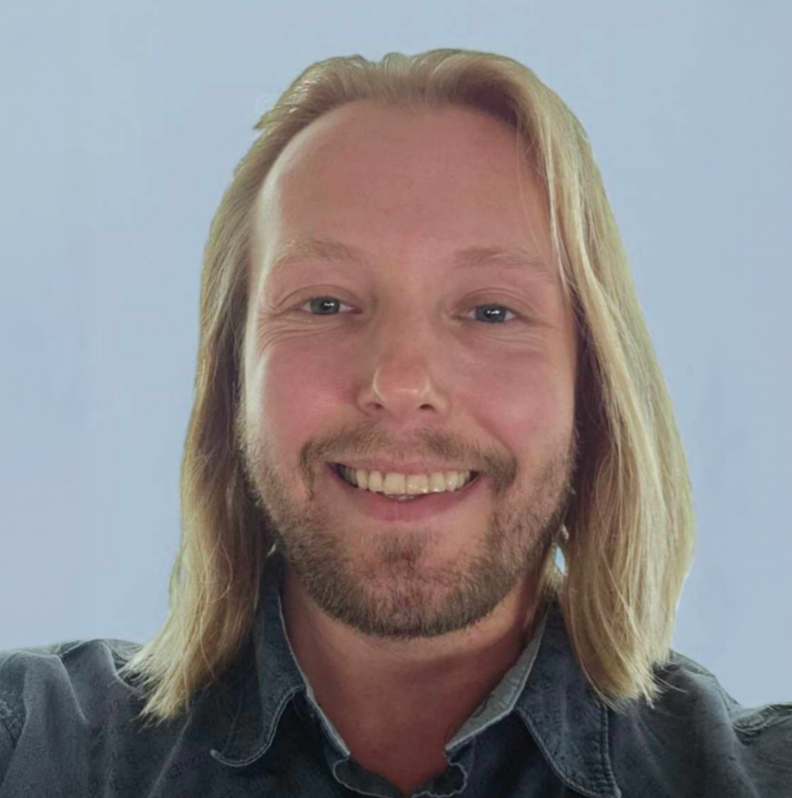
- Assistant Professor
- Teaching and Learning
Biography
Biography
Tyler Hansen earned a Ph.D. in Curriculum and Instruction in 2025 from Utah State University, Logan, Utah.
Research Interests
His research interests are at the intersection of computer science education and environmental education. Specifically, I use educational technology to create curricula and instructional practices that leverage students’ lived experience to help them make sense of the natural world. He also investigates content and language learning strategies in engineering education and how they might improve students’ engineering identity. Lastly, he investigates life science education in both formal and informal learning spaces.
Selected Publications
- Hansen, T., & Tofel-Grehl, C. (2025) The case for culturally responsive STEM education: Building an inclusive STEM ecosystem that serves Utah. In (Eds.) STEM century: It takes a village to raise a 21st century graduate, Utah edition. 21stCentEd.
- Tofel-Grehl, C., Hansen, T., & Feldon, D. (2024). Kilo: the case for community-centered data science. In C. Tofel-Grehl & E. Schanzer (Eds.), Data science for equity within K16 classrooms. New York: Routledge.
- Hansen, T., Searle, K., Jiang, M., & Barker, M. (2024). Shrinking Lands and Growing Perspectives: Affordances of Data Science Discourse During a Culturally-Responsive Maker Project. In C. Tofel-Grehl & E. Schanzer (Eds.), Data science for equity within K16 classrooms. New York: Routledge.
- Hansen, T., Fields, D., Strawhacker, A., & Kafai, Y. (2023). Immersive learning through experiential inquiry of a virtual epidemic: The curricular unit of spikey-20. The Science Teacher, 90(3), 33-39.
- Hansen, T., & Tofel-Grehl, C. (2023). Investigating Invasive Species by Constructing Data Visualizations with Teachable Machines and Coding. In Proceedings of the 8th Annual Conference on Creativity and Fabrication in Education. New York: Association for Computing Machinery (ACM).
Teaching Interests
Tyler Hansen is in the department of Teaching and Learning. He is interested in training future science teachers in both elementary and secondary contexts, along with teaching introductory science to all students.