By C. Brandon Chapman
College of Education, Sport, and Human Sciences Assistant Professor Peng He has received a $50,000 grant from Microsoft’s 2025 AI for Good initiative to develop an AI-powered tool that supports equitable science learning in middle school classrooms.
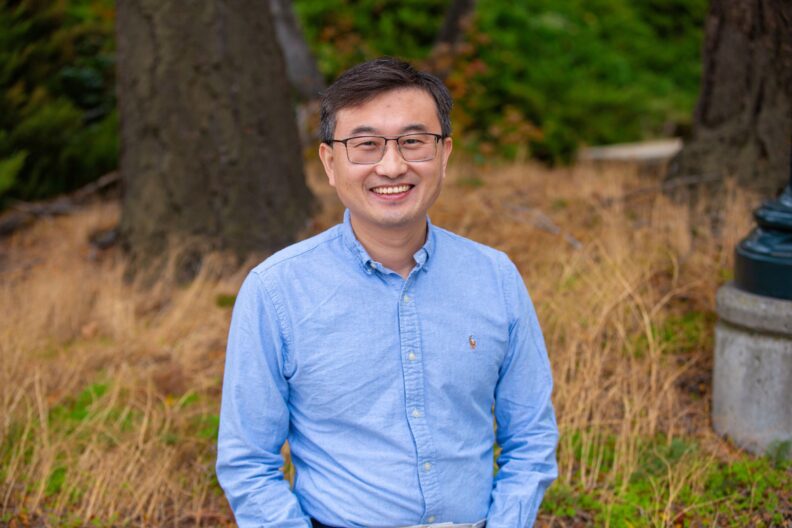
His project, titled Advancing Equitable Science Learning in Washington State Classrooms through an AI-Empowered Group Argumentation Coordinator, uses large language models and Microsoft Azure technologies to scaffold classroom discussions in real time. The system tracks student dialogue, generates adaptive prompts, and summarizes key discussion points to help teachers guide students through evidence-based argumentation.
“Scientific argumentation is essential for building critical thinking skills, but many classrooms, especially those in under-resourced schools, lack the support systems to make it effective for every student,” He said. “This tool helps ensure all voices are heard and supported during learning.”
The system will be co-designed with Washington state teachers and piloted in 6-8 middle school classrooms during the second year of the project. The goal is to create a transparent, fair, and scalable AI model that reduces instructional burden while promoting deeper engagement and learning equity.
By the end of the two-year development cycle, He said he hopes the project will deliver a classroom-tested prototype, along with teacher training resources and evaluation tools to support long-term use.
To ensure the success of the project, He will be collaborating with two CESHS faculty members, Andy Cavagnetto and Tingting Li, both bringing deep expertise in science education and human–AI interaction.
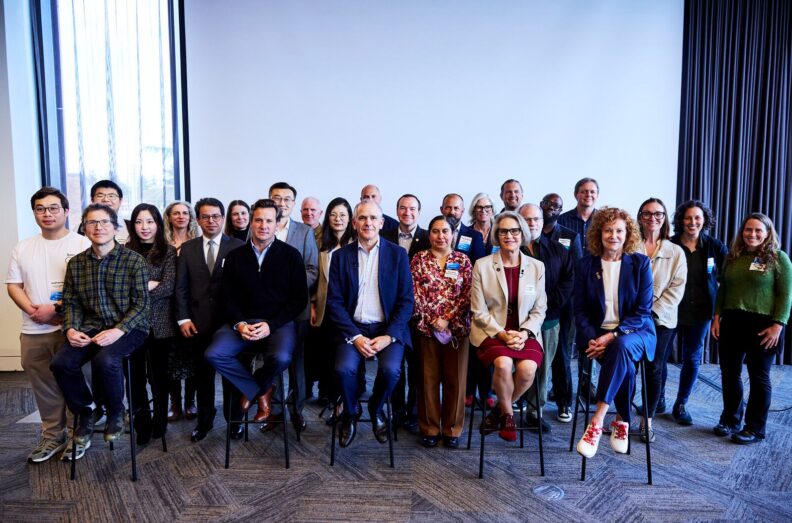
Peng He was one of three faculty from CESHS to be honored at the ceremony. Also in attendance was WSU president Elizabeth Cantwell.
“This work demonstrates how we can use AI not just for innovation, but for inclusive, student-centered impact,” He said.
###