By C. Brandon Chapman — College of Education, Sport, and Human Sciences
Inextricably connected to any discussion of Sport Management and its legacy are names like Jo Washburn and Sue Durrant.
But to truly understand legacy, you have to drop another name: Kinsey Kallaher.
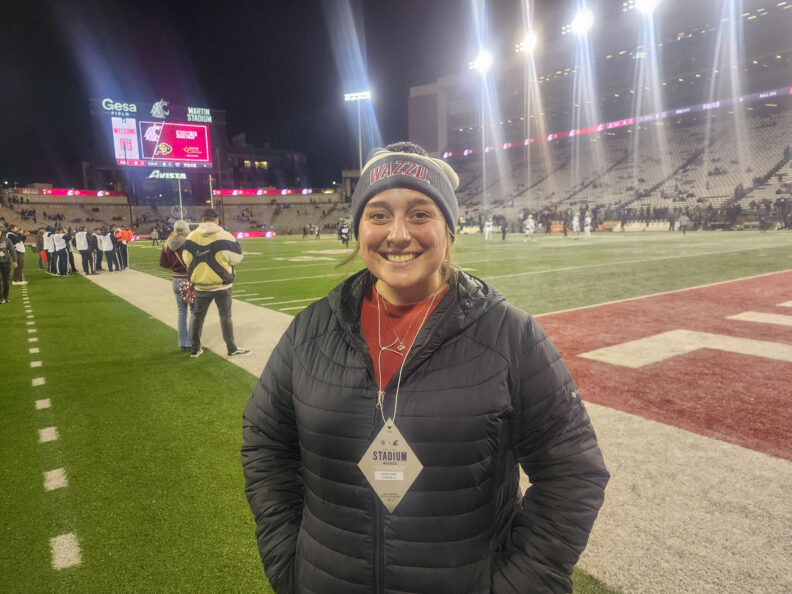
Fewer folks have heard of Kallaher. Not surprising. Even though the College of Education, Sport, and Human Sciences (CESHS) recently shared a small feature about Kallaher, she only just graduated from the program in the spring. But that’s why she’s so important to this discussion: If it weren’t for the program’s current success, then the work of Washburn or Durrant wouldn’t be legacy, it would only be nostalgia.
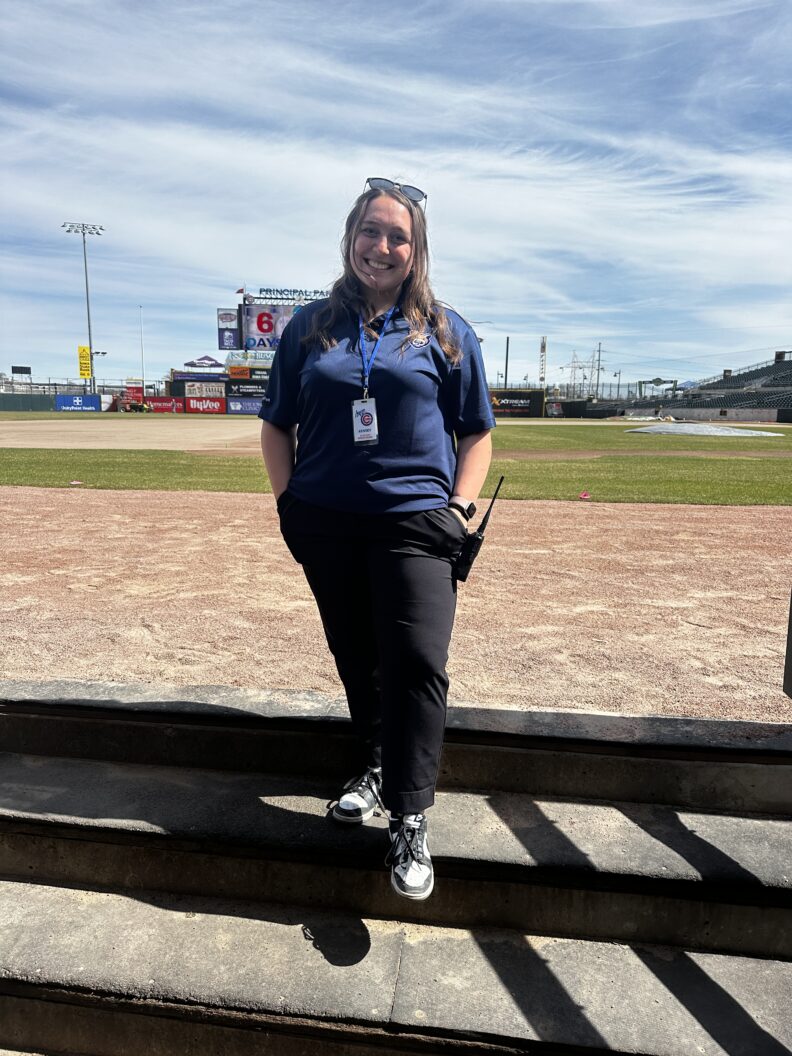
Kallaher is completing an internship with the Iowa Cubs, a minor league baseball club. To understand the importance of this, we must go back to the beginning.

Program begins
Sport Management began humbly at Washington State University. In the late 1970s, a few faculty members in physical education began experimenting with coursework that examined sport not just as competition, but as business, culture, and community. By 1985, those experiments became formalized into a degree program. This fall, that program celebrates its 40th anniversary.
Its roots often seem a little fuzzy, but from the rise of women’s sports and the fight for equality in athletics. Many of the program’s earliest leaders were women’s coaches and advocates who saw sport as more than wins and losses. They were educators, administrators, and pioneers.
Washburn and Durrant were two of the most influential.
Washburn was a scholar and administrator who laid much of the intellectual foundation for Sport Management at WSU. She had a nearly 40-year career at WSU and served as women’s athletic director from 1965-1982. She was inducted into the WSU Athletic Hall of Fame in 2011.

Durrant was a coach, professor, and relentless advocate for equity who lived the evolution of women’s athletics before and after Title IX.

Durrant joined the WSU faculty in 1962 and went on to coach women’s volleyball and basketball, while also instructing synchronized swimming. She helped found the Northwest College Women’s Sports Association, an organization that became part of the Association for Intercollegiate Athletics for Women (AIAW).
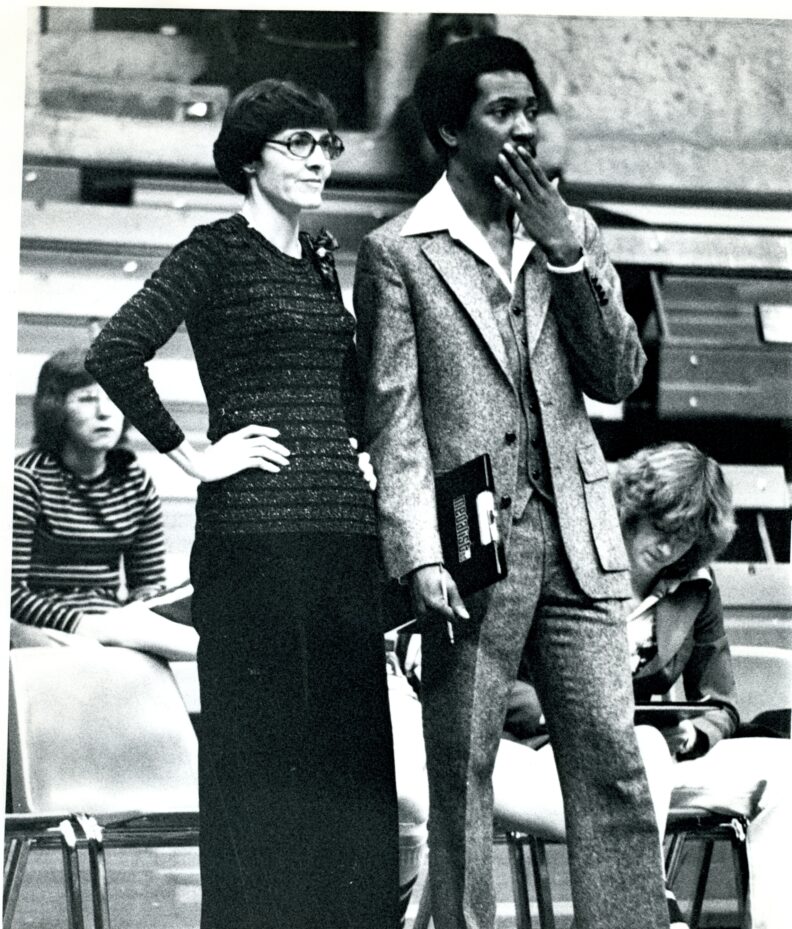
In addition to all of that, Durrant was at the forefront of the battle for equal opportunity.
“When Title IX passed in 1972, we thought change would come quickly,” Durrant recalled. “But it was obvious very soon that women weren’t going to get equal opportunities just because there was a law. We had to fight for it.”
That fight came to a head in Blair v. Washington State University, a 1979 lawsuit filed by athletes and faculty, including Durrant, alleging WSU was failing to comply with Title IX. The case went all the way to the Washington State Supreme Court, which in 1987 ruled that football—long a point of contention—must be included in calculations of gender equity.
“It was never about taking anything away from men,” Durrant said. “It was about women getting their fair share, their rightful place in athletics. Sport is too important to be denied to half the population.”
Education at the core
As the legal and cultural battles reshaped college sports, Sport Management at WSU found its identity. It would not be a program defined by producing executives who saw athletes as commodities. Instead, it rooted itself in education.
“The foundation of the Sport Management program has always been education, as well as the intersection of sport and personal development,” said Tammy Crawford, the program’s current chair. “We want students to understand the impact of sport as part of society.”

That philosophy has endured. Sport Management courses blend business principles such as marketing, finance, and communications with explorations of how sport influences communities, identities, and social change. Practicum experiences require students to roll up their sleeves, work in real organizations, and reflect critically on what they learn.
For Kallaher, that combination was irresistible. She entered WSU unsure of her direction, leaning toward business. But one informational meeting changed everything.
“Meeting with Corrie McGrath, the Sport Management advisor, she sold me on the tight-knit community and the variety of opportunities the program offered,” Kallaher said. “I loved the idea of being able to gain hands-on experience through classes, providing me with industry experience before graduating.”
Her coursework and practicums gave her both breadth and depth. She coached youth soccer, basketball, and softball for Pullman Parks and Recreation. She worked two seasons with Cougar Sports Properties, managing sponsorship activations and hospitality. She even rose to head property assistant, leading a team of 25 other students.
“One of my favorite memories was walking onto the sideline of Gesa Field for kickoff of the Wisconsin game,” she said. “It was a sold-out stadium; the energy was unbelievable. In that moment, I realized I had chosen the right industry.”
The long shadow of Title IX
Kallaher’s opportunities exist because of the persistence of Washburn, Durrant, and countless other advocates. Durrant, in particular, knows how high the stakes were.
“There were times when it felt like we were pushing a boulder uphill,” she said. “But I always believed sport could change lives. And if women weren’t allowed the same chances, then we were denying half our students that transformative experience.”
Kallaher agrees. In fact, she received a scholarship named after the respected tandem: the Jo Washburn and Sue Durrant Sport Management Scholarship.
“I’m extremely grateful for the dedication, work, and voices that Jo Washburn and Sue Durrant exemplified in the fight for gender equality,” she said. “Knowing that if it weren’t for them, I wouldn’t be given the same opportunities and experiences I am today is heartbreaking. I believe I would be lost without them.”
The through-line from the courtroom battles of the 1970s to the capstone projects of today is clear: Sport Management at WSU is built on access, education, and impact.
Beyond the Classroom
That philosophy is visible in the program’s practicum structure. Students must complete three different hands-on experiences, encouraging them to test various areas of the industry. Some find their niche in community recreation. Others pursue intercollegiate athletics, professional sports, or esports. Still others discover a passion for sporting goods, apparel, or representation.
“The practicums push you,” Kallaher said. “They let you try different areas, find what you enjoy, and learn what you’re good at. I feel so much more prepared because of them.”
For her, one of the most memorable experiences was planning a Halloween carnival with classmates. What had been a modest event in previous years exploded under their watch, attracting more than 600 people, a sixfold increase.
“Growing up in Pullman, I always looked forward to Parks and Recreation events,” she said. “Knowing that I helped provide that opportunity to younger generations was one of my favorite experiences.”
Carrying the torch
Durrant beams when she hears stories like Kallaher’s. At 88, she has seen the arc of progress firsthand, from the days when women athletes drove their own vans to games, to now, when graduates of Sport Management hold positions across the industry.
“What gives me the most pride,” Durrant said, “is not just that we opened doors, but that the students walking through them are doing incredible things. They’re carrying it forward.”
Kallaher feels a responsibility to do exactly that.
“I do believe that as I embark on my career in sports, I have an obligation to extend their legacy and continue fighting for gender equality,” she said. “Jo Washburn and Sue Durrant were part of the fight for my generation. I can continue to do so for future generations.”
Looking Ahead: The Next 40 Years
As Sport Management celebrates its 40th anniversary, the College of Education, Sport, and Human Sciences is also embracing a new identity. Its very name now reflects the significance of Sport Management within the larger academic community.
Where does the program go from here? Crawford sees opportunities in expanding partnerships with professional organizations, broadening research on the societal role of sport, and preparing students for an industry that continues to evolve.
“The business of sport is global, digital, and constantly changing,” she said. “Our students are going to be leaders not just in traditional athletics, but in areas like esports, data analytics, and community engagement.”
For Durrant, the imperative is simple: never lose sight of education and equity.
“Sport can make you a better person,” she said. “That should always be at the heart of what we do. And we must keep fighting so that opportunity is never limited by gender, race, or background.”
Kallaher, now working long days and nights in minor league baseball, already sees how demanding the industry can be. But she also sees the possibilities.
“Working in MiLB is not for the weak,” she laughed. “But it’s teaching me so much. And I know that someday, I want to make an impact in fan experience or community relations. I want to give kids the same memories WSU Athletics gave me.”
In that hope lies the program’s future: students who are not only prepared for careers but also committed to carrying forward a legacy of equity, education, and impact.
Forty years ago, Sport Management at WSU was a bold experiment born from the determination of coaches and educators like Washburn and Durrant. Today, it is a thriving program sending graduates like Kallaher into the world of sports. Forty years from now, its legacy will be measured not only in championships or careers, but in the lives changed by those who believe, as Durrant does, that sport is too important to be denied.
###