DEAN’S MESSAGE
A welcome back message from our dean, Karen Thomas-Brown, in both video and written format.
Video welcome
Written welcome
Dear Students, Faculty, and Staff,
Welcome to the College of Education, Sport, and Human Sciences 2025-26 Academic Year!
As we begin a new academic year, I am thrilled to welcome both new and returning members of our vibrant community. Our college is built on a foundation of excellence, innovation, and a deep commitment to the public good through education, sport, kinesiology, and wellness. Whether you are preparing to become an educator, exploring the science of human movement, or advancing research in health and performance, you are part of a legacy that transforms lives.
Welcome Message from the Dean
Dear Students, Faculty, and Staff,
Welcome to the College of Education, Sport, and Human Sciences 2025-26 Academic Year!
As we begin a new academic year, I am thrilled to welcome both new and returning members of our vibrant community. Our college is built on a foundation of excellence, innovation, and a deep commitment to the public good through education, sport, kinesiology, and wellness. Whether you are preparing to become an educator, exploring the science of human movement, or advancing research in health and performance, you are part of a legacy that transforms lives.
Education is the most powerful weapon which you can use to change the world.”
Nelson Mandela
Here at WSU, we believe in the power of collaboration, curiosity, and compassion. Our faculty are dedicated mentors, our staff are unwavering supporters, and our students are the heart of everything we do. Together, we strive to create comprehensive learning environments, foster meaningful research, and engage with communities across Washington and beyond.
Last year was a significant year for this college. Not only did we go through the process of changing the college’s name to one that reflects the breadth and depth of our interdisciplinary and transdisciplinary work, but for the first time, students pursuing majors in Sport saw their academic identities reflected in their college name. Last year, we celebrated major wins for the ROAR program that targets and supports students with cognitive and intellectual disabilities. We celebrated the retirements of Bev Rhoades, AG Rud, Sharon Kruse, and Judy Morrison, and we paused to remember the life and extraordinary contributions of Gay Selby.
Some of the priorities for this academic year include rebranding while reinforcing those areas we are already good at, forging new paths in many areas, such as innovative online programming, launching new stackable credentials, and growing novel research paths that include accelerated AI infusion into our daily practices, and becoming more entrepreneurial as a community.
As we face ongoing budget challenges and an uncertain grant landscape, I encourage our CESHS researchers to continue pushing the boundaries of research and innovation. Many of your efforts have already yielded results and will continue to do so. I urge students to communicate their needs to us, as we have an exceptional development team led by Jennifer Dean, which has surpassed the 2024-25 fundraising goals in ways that strengthen support for students. I ask CESHS staff to maintain the excellent work you do to uphold the college’s brand, reputation, and community. To our alumni, supporters, and friends, I thank you for your steadfast support of our college and ask that you continue to help us grow in new and remarkable ways.
This academic year, we will expand access by launching new online programs to reach more students across the Pacific NW and beyond. We are increasing experiential learning opportunities, advancing research in AI and STEM education, and building capacity in leadership and professional development. We are deepening our community engagement, both locally and globally. And we are doing all of this while actively exploring revenue-generating strategies that will help us become more self-sustaining and resilient.
We also look forward to celebrating important moments, such as the 40th anniversary of our Sport Management program this September. Milestones like these remind us of the strength of our legacy and the potential of our future.
Our CESHS community, I encourage you to take full advantage of the opportunities ahead—get involved, ask questions, challenge yourself, and support one another. This is your time to grow, lead, and make a difference.
Let’s make this year one of inspiration, achievement, and Cougar pride.
GoCougs,
Karen Thomas Brown
Dean, College of Education, Sport, and Human Sciences
Washington State University
OUR PEOPLE
Chuck Arnold, President of the Seattle Seahawks, to deliver a keynote
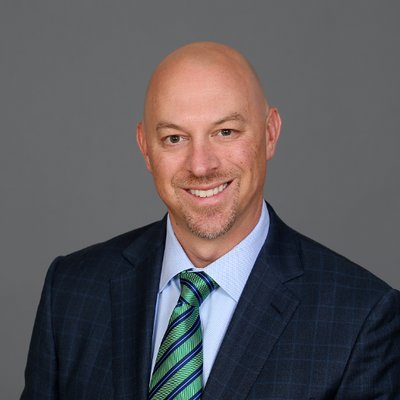
Chuck Arnold is an alumnus of the Sport Management program and will be the keynote speaker for the 40th Anniversary celebration.
This year, we celebrate Sport Management’s 40th anniversary. It has a deep legacy, which, at its core, is made up of our people to whom the program has had an impact on their respective lives and careers. #WSUSptMgmt40
Inextricably connected to any discussion of Sport Management and its legacy are names like Jo Washburn and Sue Durrant.
But to truly understand legacy, you have to drop another name: Kinsey Kallaher.
Fewer folks have heard of Kallaher. Not surprising. Even though the College of Education, Sport, and Human Sciences (CESHS) recently shared a small feature about Kallaher, she only just graduated from the program in the spring. But that’s why she’s so important to this discussion: If it weren’t for the program’s current success, then the work of Washburn or Durrant wouldn’t be legacy, it would only be nostalgia.
In order to more fully look at the impact of the Sport Management program, we chose to highlight five alumni, in varying careers and stages of their careers.
August 25
Colin Connolly: Life in The Show
From WSU Sport Management to the Detroit Tigers, Connolly has turned a childhood dream into a profession.
August 06
Monica McNamara: From pool to planner
This WSU Sport Management alumna used to swim for the Cougs. Now she plans events for USC’s Galen Center.
July 30
Jared Lindorfer: From lifeguard to leader
How a campus job — and Sport Management — helped change everything.
July 02
Giles Dowden: From Gridiron to Grand Prix
In Racing, Giles Dowden finds his lane
June 13
Kinsey Kallaher: From Pullman to Pros
Kinsey Kallaher finds her footing with the Iowa Cubs.
Two-day celebration to honor impact
Washington State University’s Sport Management program will mark its 40th anniversary with a two-day celebration September 5–6 in Pullman, bringing together alumni, faculty, students, and industry leaders to honor the program’s history and chart its future.
The weekend kicks off Friday, September 5, with a social at the Elson S. Floyd Cultural Center. The event features a keynote by program alumnus Chuck Arnold (’94), president of the Seattle Seahawks and First & Goal Inc., alongside opportunities to connect with faculty other alumni, and hear from students.
On Saturday, September 6, the program will host a pre-game tailgate at the lawn between the Spark, Education Addition, and Cleveland Hall. During the game that evening at Gesa Field against San Diego State, Arnold will raise the flag, and then the Sport Management program will be recognized on-field for its 40-year legacy of preparing leaders across the sports industry.
… milestones like this are a chance to honor the people who built the foundation, celebrate the students and alumni who keep advancing the field, and set our sights on the next 40 years of impact.”
Karen Thomas-Brown, CESHS dean
NEWS
Campus highlights
WSU PULLMAN
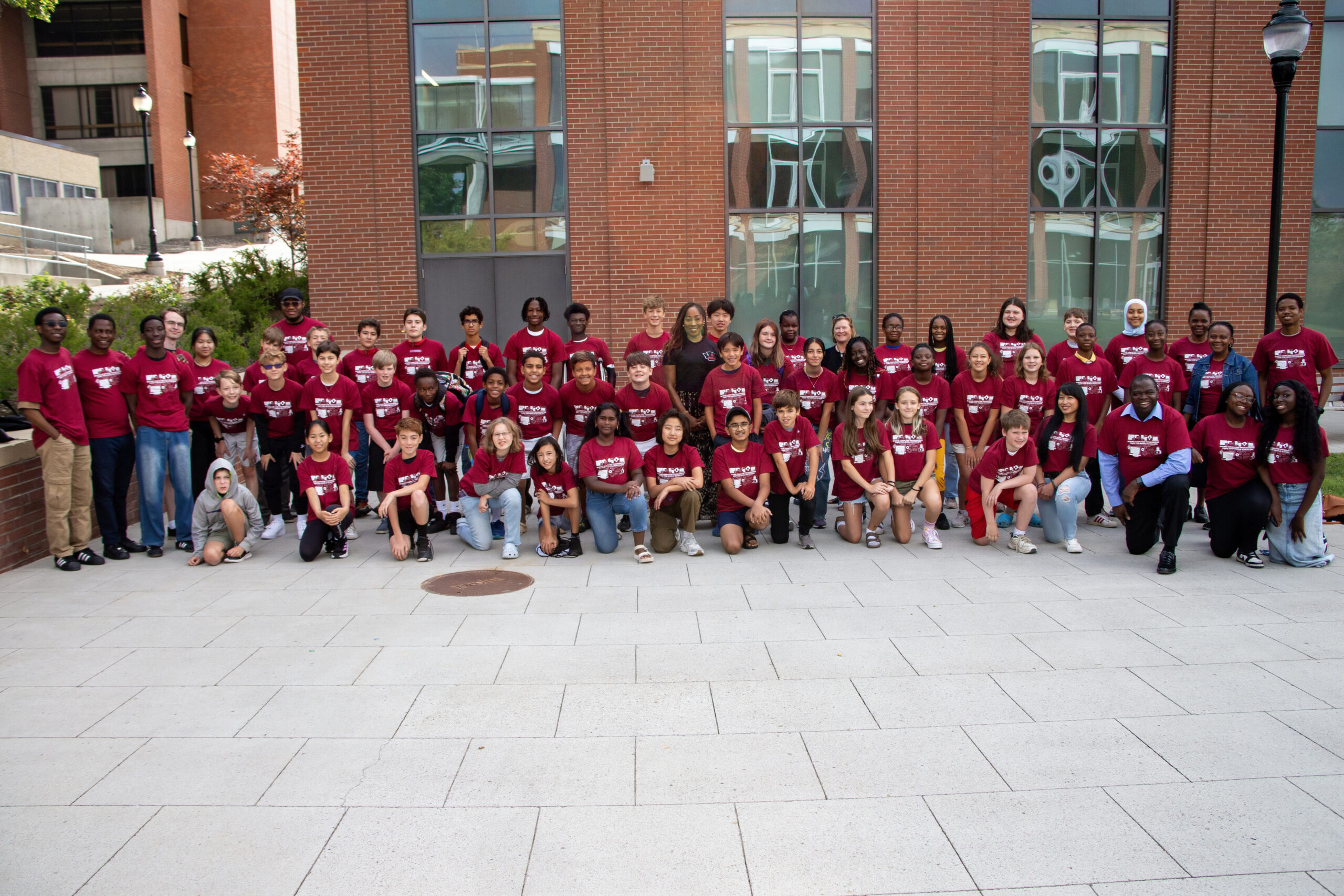
Programming camp held for ninth year
As it appeared in WSU Insider on July 24, 2025:
Programming camp returns for ninth year
Washington State University’s College of Education, Sport, and Human Sciences will host its free summer programming camp for the ninth consecutive year, offering middle school students the chance to develop computational thinking and problem-solving skills.
The in-person camp runs Aug. 11–15 at WSU Pullman. A virtual option, now in its sixth year, will also be offered Aug. 4–8 to make the camp accessible to students outside the Pullman area.
Sola Adesope, associate dean for research and external funding, professor of educational psychology, and camp founder, said coding at a young age benefits students’ cognitive development, enhancing their problem-solving, mathematical, and creative skills.
“Unlike urban areas where K–12 students have an abundance of such camps, opportunities like this are often scarce in rural areas,” Adesope said. “This camp fills a critical gap and advances our land-grant mission of positively impacting our community by providing much-needed STEM training and support for middle school students.”
This camp fills a critical gap and advances our land-grant mission of positively impacting our community by providing much-needed STEM training and support for middle school students.”
Sola Adesope, camp founder
Graduate research assistant Funso Oje, who has helped with the camp for several years, said the hands-on, game-based curriculum keeps students engaged.
“Students are actively building, experimenting, and solving problems, and they see their progress in real time,” Oje said. “We designed the curriculum to be fun and engaging by tying coding into building a game.”
Oje noted that middle schoolers’ natural curiosity and openness to learning make this an ideal time to introduce coding, which also teaches persistence.
“When their code doesn’t work the first time, they learn to debug, try again, and not give up,” he said. “Those are powerful life skills that go beyond tech. Coding is also becoming a fundamental skill, much like math, and early exposure prepares students for the future.”
Chloe Dydasco, a doctoral candidate in educational psychology, added that coding at this age helps students retain concepts and better understand real-world programming careers.
“Like learning any other language or skill, exposure to coding from a young age, with continuous practice, helps solidify concepts in students’ long-term memory,” she said. “Seeing their code come to life in games and troubleshooting errors gives them insight into what coders and programmers do daily as a career.”
The camp continues to make a meaningful impact in the community by equipping students with critical STEM skills and fostering curiosity, creativity, and resilience — all while having fun.
WSU Tri-Cities
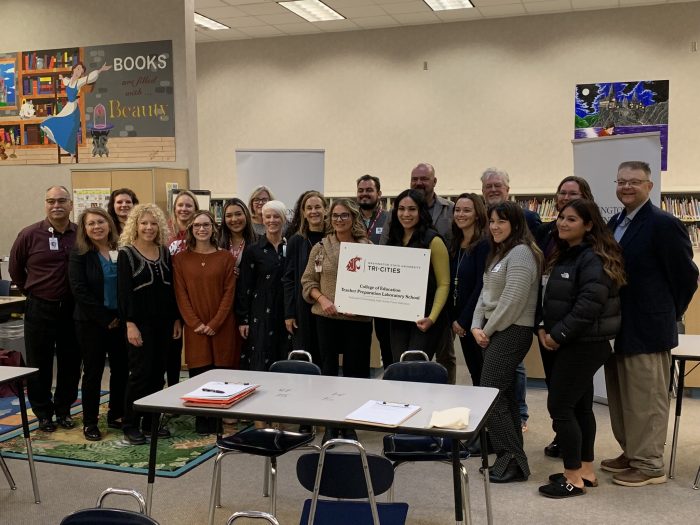
Enrollment up; new student opportunities
Enrollment is strong
Enrollment is strong at WSU Tri-Cities’ Teacher Education program. In fact, it’s the highest it has been in some time. Both the senior cohort and new cohort sit just under 50 students. You m highest number for years: 48 co-hort, 47 current senior cohort.
Additionally, there are 18 students in the new Master in Teaching cohort.
The Alternate Route program has a full cohort of 15 students.
Additionally, there are 24 additional students in the Teaching Bridge program.
Two more teaching lab schools
WSU Tri-Cities has added two more “Teaching Laboratory Schools” to their program, which is still in its infancy.
Carmichael Middle School in Richland and Park Middle School in Kennewick are the two new additions.
The program, allows CESHS preservice teachers a rich and meaningful early practicum experience. Rather than be placed in one classroom, the student will be able to observe multiple classrooms focused on specific topics about teaching and learning. After observing, candidates then volunteer in specific classrooms to support and apply teaching techniques.
The schools now involved are:
- Carmichael Middle (Richland
- Maya Angelou Elementary (Pasco)
- Park Middle (Kennewick)
- Roselind Franklin STEM Elementary (Pasco)
- Tapteal Elementary (Richland)
There is also a teaching lab classroom on the WSU Tri-Cities campus with Sarah Newcomer leader the lab which is set up like a K-5 classroom.
Other important highlights
- Microsoft grant to Brian French supports CESHS efforts to boost equity in science education
- Tingting Li awarded fellowship for AI and science ed research
- CESHS’ Methods Workshop brings researchers together through advanced data modeling
- Peng He earns Microsoft grant to bring AI-powered equity to science classrooms
- John Mancinelli named director of WSU Tri-Cities
Department highlights
Each of our three academic departments has a lot going on. We’ll share some highlights from each, with a little extra focus this time on the Teaching and Learning Department.
A few updates from department chair Katherine Rodela:
- Sport Management Program Celebrates 40 Years!
This fall, the Sport Management Program at WSU marks its 40th anniversary with a special celebration during Homecoming Weekend, September 5–6. Events include a Friday evening social at the Elson S. Floyd Cultural Center featuring keynote speaker Chuck Arnold, President of the Seattle Seahawks and Sport Management alumnus (’94). On Saturday, the program will host a pre-game tailgate, and program faculty and staff will be honored on-field during the WSU football game—recognizing four decades of impact, innovation, and excellence in sport leadership education. - Educational Leadership Launches LEAD Scholars Program
This fall, we launch the LEAD Scholars Program—a statewide initiative in partnership with Pasco School District, Spokane Public Schools, and Vancouver Public Schools, supporting 24 educators in earning their school administrator credentials. Funded by College Spark of Washington, the program includes graduate coursework, a year-long internship, and mentoring to build leadership capacity in Washington’s PK–12 schools. LEAD Scholars are experienced educators committed to student success and strong school communities. The program reflects our department’s mission to prepare purposeful, resilient leaders who serve the public good and lead with integrity, care, and courage.
A few updates from department chair Kira Carbonneau.
- Strength and Conditioning Accreditation
We are pleased to announce that our Strength and Conditioning program has officially received full accreditation from the Council on Accreditation of Strength and Conditioning Education (CASCE). This recognition highlights the program’s commitment to academic excellence, student preparation, and alignment with national standards in the field. Congratulations to the faculty, staff, and students whose dedication made this achievement possible. - Educational Psychology Program Name Change
The Educational Psychology program is in the process of changing its name to Educational Psychology and Methodology. This updated title better reflects the program’s strong emphasis on both psychological foundations of education and advanced research methodology. We will keep the community updated as this change moves through the approval process.
A few updates from department chair Tom Salsbury.
Teaching and Learning Leads Innovation
Faculty and staff in the Department of Teaching and Learning are driving projects that reflect a strong commitment to equity, technology integration, and community partnerships.
- Expanding Pathways: Don McMahon and Jonah Firestorm are developing stackable micro-credentials in technology and CTE education. These pathways give career/technical professionals and teachers the chance to earn university credit or advanced degrees in areas like AI, universal design for learning, science of reading, and language development standards.
- Civil Discourse in Classrooms: Jane Kelley is partnering with Sphere to host an October workshop that will provide educators with practical, research-based strategies for guiding tough conversations in schools.
- Supporting Students with Disabilities: Special Education faculty will welcome OSPI visitors to explore dual enrollment opportunities under Washington’s 2024 guidance, including possible pilot projects informed by WSU ROAR students and transition scholars.
- Responsible AI in Education: Tingting Li, a NAEd/Spencer Postdoctoral Fellow, is studying AI-supported assessments aligned with NGSS. She and Peng He are also co-leading the CAIRE Center—an interdisciplinary hub for responsible AI in education backed by national funders and preparing to engage with Microsoft’s AI Economy Institute.
Language, Culture, and Field Experiences
The department is also advancing work that strengthens cultural connections and real-world learning.
- Language Revitalization: Angel Sobotta and Anne Marie Guerrettaz, together with the Nez Perce Language Program, earned a $400,000 Spencer Foundation grant to support regional language revitalization efforts.
- International Exchange: This July, 67 students from Okinawa spent three weeks in Pullman for a language and culture camp. The experience created teaching and counseling opportunities for 18 CESHS students while building collaboration across the college.
- Improving Student Placements: To better support students and school partners, the department is transitioning to a new CORE database for managing field placements. Led by John Mancinelli, Matthew Vaughn, Rob Hoffman, and Staci Bickelhaupt, the system will improve efficiency and communication with schools.
Our Faculty
Faculty feature
Stephany RunningHawk Johnson — Assistant Professor — Cultural Studies and Social Thought in Education
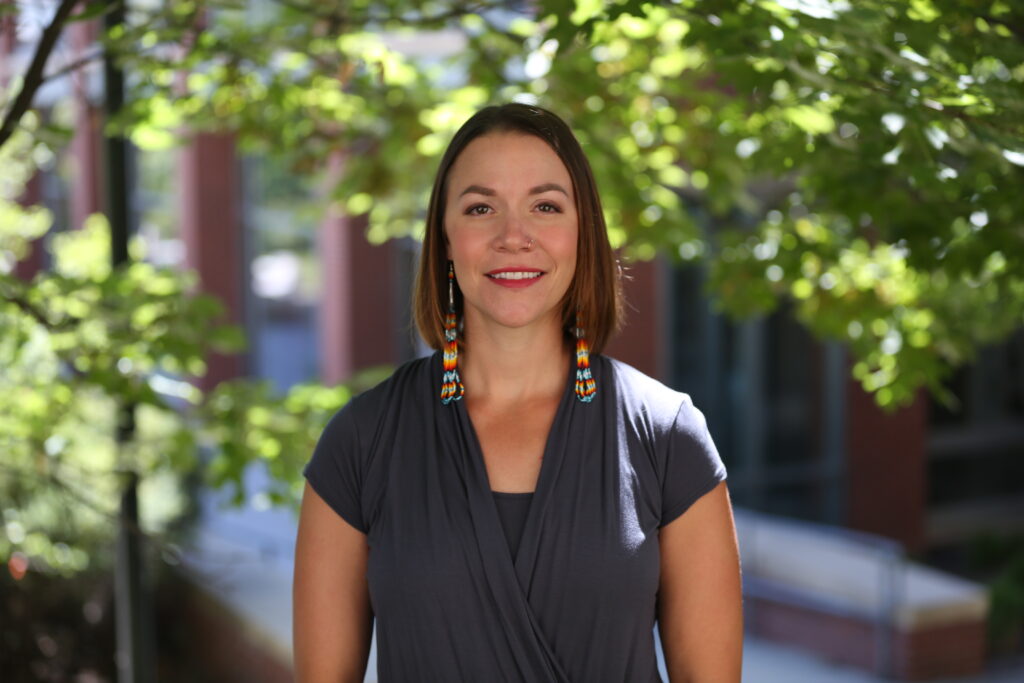
A Scholar’s Responsibility: Stephany RunningHawk Johnson’s Journey with WSU
Working at Washington State University is more than a career, especially for Stephany RunningHawk Johnson. For her, it’s a calling rooted in place, purpose, and people.
As an Indigenous scholar and CESHS faculty member, she grounds her work in honoring the Nimíipuu homelands where WSU stands.
“Working at CESHS has given me the opportunity to pursue work that I feel is meaningful and that helps others,” Stephany says. “I try to always hold my Indigenous value of connection to place at the heart of the work that I do.”
A Scholar’s Responsibility: Stephany RunningHawk Johnson’s Journey with WSU
Working at Washington State University is more than a career, especially for Stephany RunningHawk Johnson. For her, it’s a calling rooted in place, purpose, and people.
As an Indigenous scholar and CESHS faculty member, she grounds her work in honoring the Nimíipuu homelands where WSU stands.
“Working at CESHS has given me the opportunity to pursue work that I feel is meaningful and that helps others,” Stephany says. “I try to always hold my Indigenous value of connection to place at the heart of the work that I do.”
That sense of connection deepened after she spent a year away from WSU. “The thing I missed the most was working with my graduate students,” she reflects. “Helping them discover who they are and how that drives their scholarly work is incredibly fulfilling. I truly learn so much from them, and I missed those conversations.”
Stephany also sees how CESHS programs ripple outward. She points to the impact of doctoral students who mentor pre-service teachers. “Many of our graduate students come from very different backgrounds than the majority of our pre-service teachers. They help future teachers see that their students may be different from themselves and provide strategies for building relationships based on respect.”
As an Indigenous educator, Stephany feels a responsibility to help colleagues and students recognize WSU’s obligations to the land and its people. “I often see my work as a sort of translation,” she explains. “I help non-Indigenous scholars and educators better understand their Indigenous students — and also that as settlers in this place, they have an obligation to the Nimíipuu. We need action, not just words.”
Looking ahead, she hopes to strengthen ties with tribal nations and local schools, including expanding use of the Since Time Immemorial curriculum in Pullman classrooms. Her vision is for pre-service teachers to leave WSU prepared to carry that learning into schools across Washington.
“My hope is to continue building and deepening these relationships, so that our future teachers carry forward both respect for and responsibility to Indigenous communities,” she says.
To circle back, WSU is more than a job. For Stephany, WSU is a place of accountability, growth, and the chance to inspire the next generation of educators to honor the lands and people that make their work possible.
EVENTS
Here are some upcoming events we’ve recently hosted as well as a few we’re looking forward to in the near future.
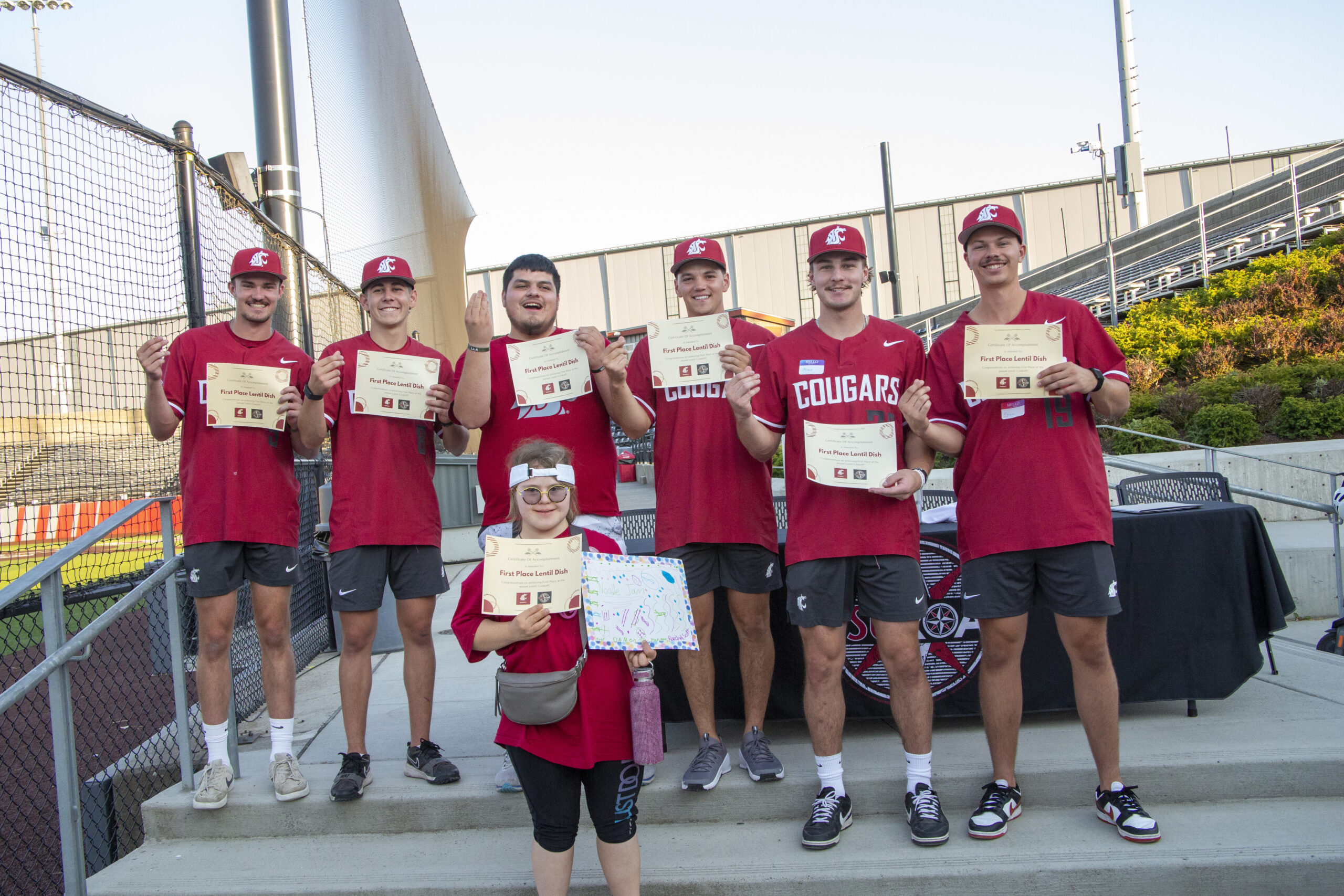
Fifth Annual Lentil Cookoff
Aug. 22 at Bailey-Brayton Field
Sport Management 40th Anniversary celebration
Sept. 5-6 — Times Vary